
Green Tenaga helps commercial, industrial, EV charging, microgrid, and critical infrastructure sites reduce grid import, support demand response events, and unlock flexibility value with Battery Energy Storage Systems.
Demand response allows facilities to reduce or shift electricity consumption during grid peak periods, supply constraints, or market stress events.
For commercial and industrial sites, traditional demand response can be difficult because manual load curtailment may disrupt production, comfort, or operations.
With BESS, facilities can respond by discharging stored energy instead of switching off key loads.
Common demand response challenges and how BESS helps.
Facility demand varies due to production schedules, weather, equipment start-up, occupancy, or operational changes.
BESS provides fast, controllable power support to offset load variability during response events.
Load reduction often depends on people, processes, or manual switching, resulting in delayed or inconsistent response.
BESS can be automated via EMS based on grid signals, event instructions, or site load conditions.
Curtailing HVAC, compressors, production lines, or essential systems may affect output, comfort, or safety.
BESS supplies energy during demand response events, reducing the need to shut down key operations.
Demand response programmes may require response levels, availability, duration, and verification.
BESS provides predictable and measurable dispatch to help meet response requirements.
Charge. Standby. Dispatch. Recover.
BESS charges during normal operating periods or lower-demand periods.
The system remains available to respond to grid events or programme instructions.
BESS discharges to reduce grid import while supporting facility loads.
After the event, the battery recharges and returns to standby mode.
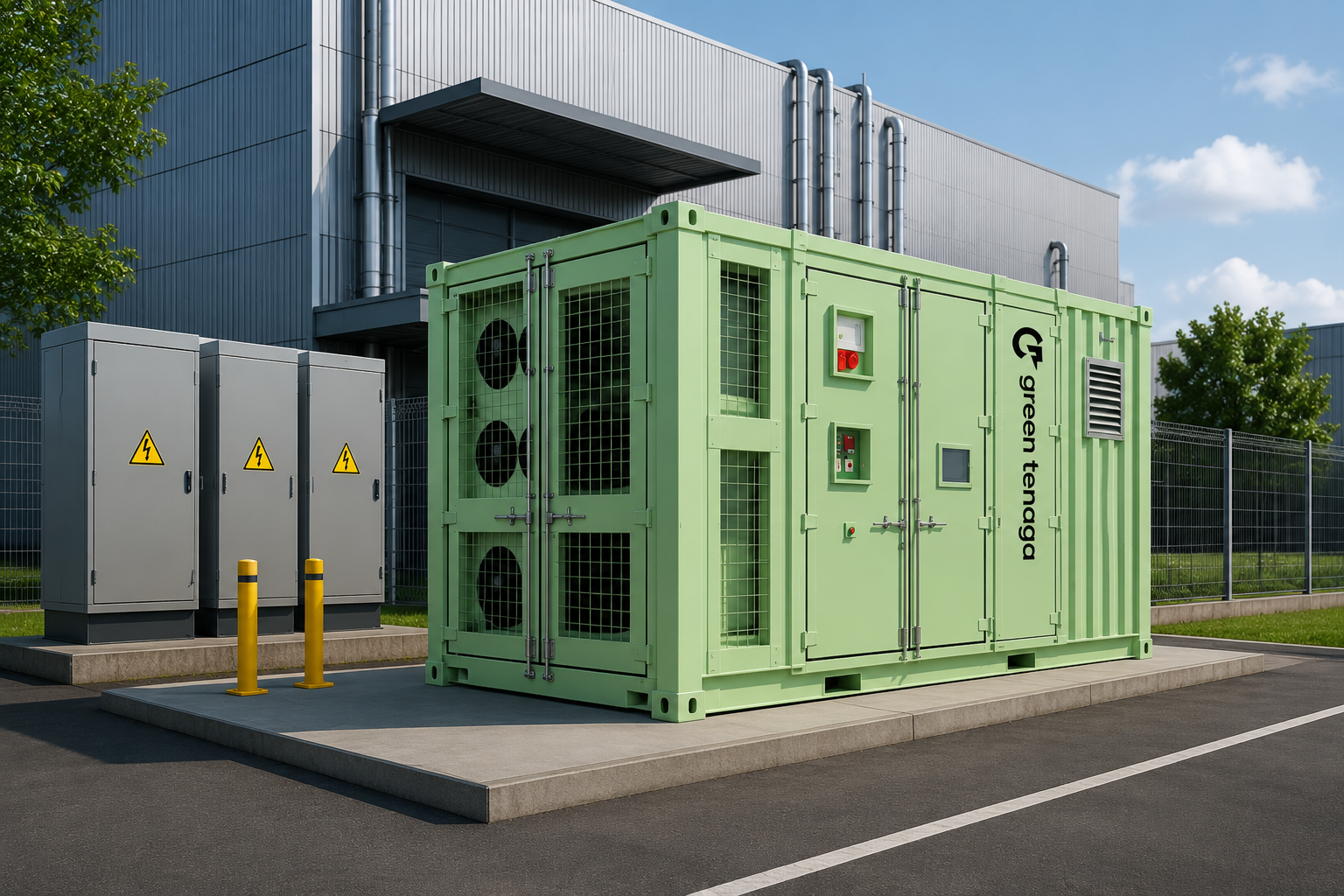
BESS is installed at the facility side to reduce grid import during demand response events.
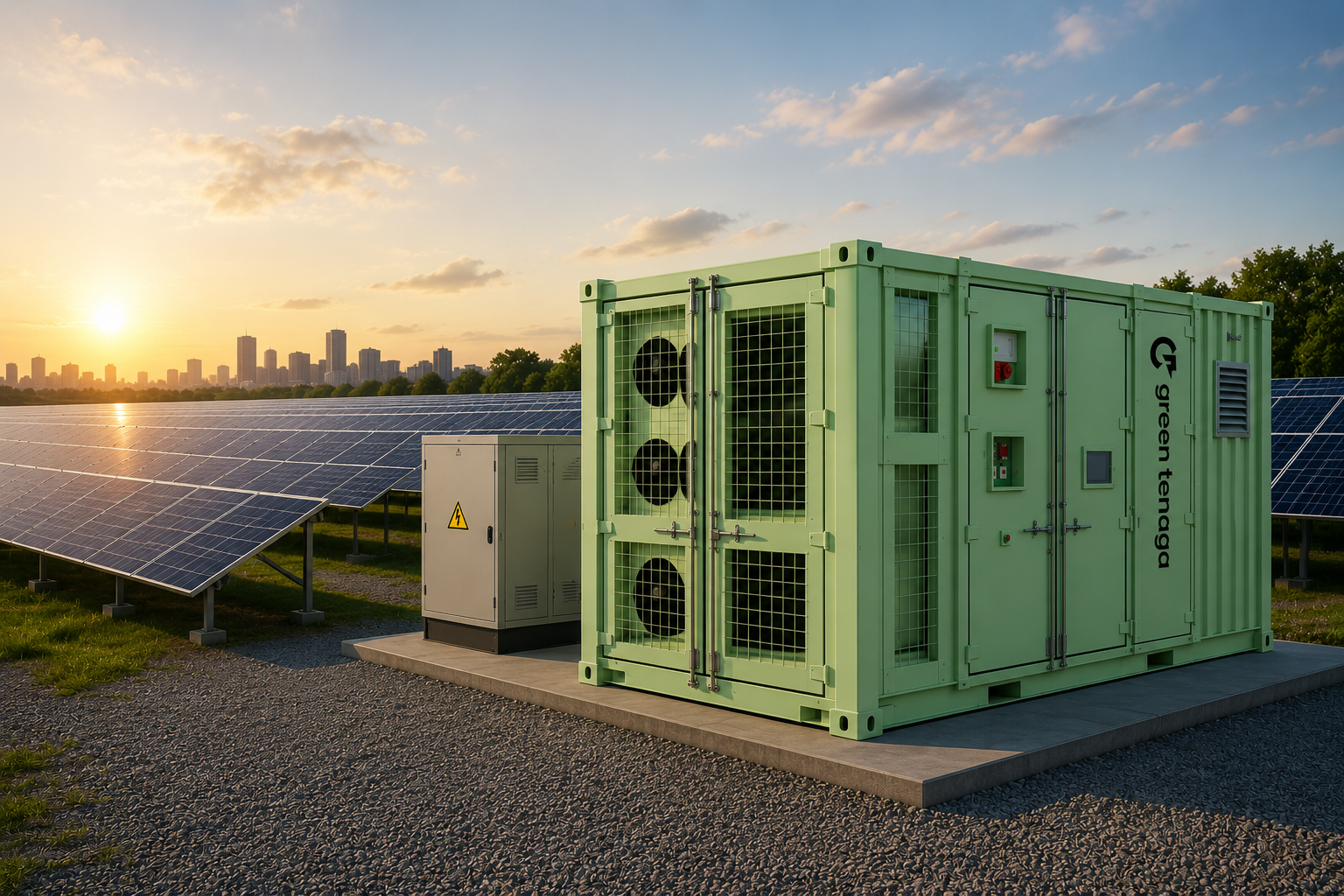
Solar generation is stored and dispatched during grid peak events or high-demand periods.
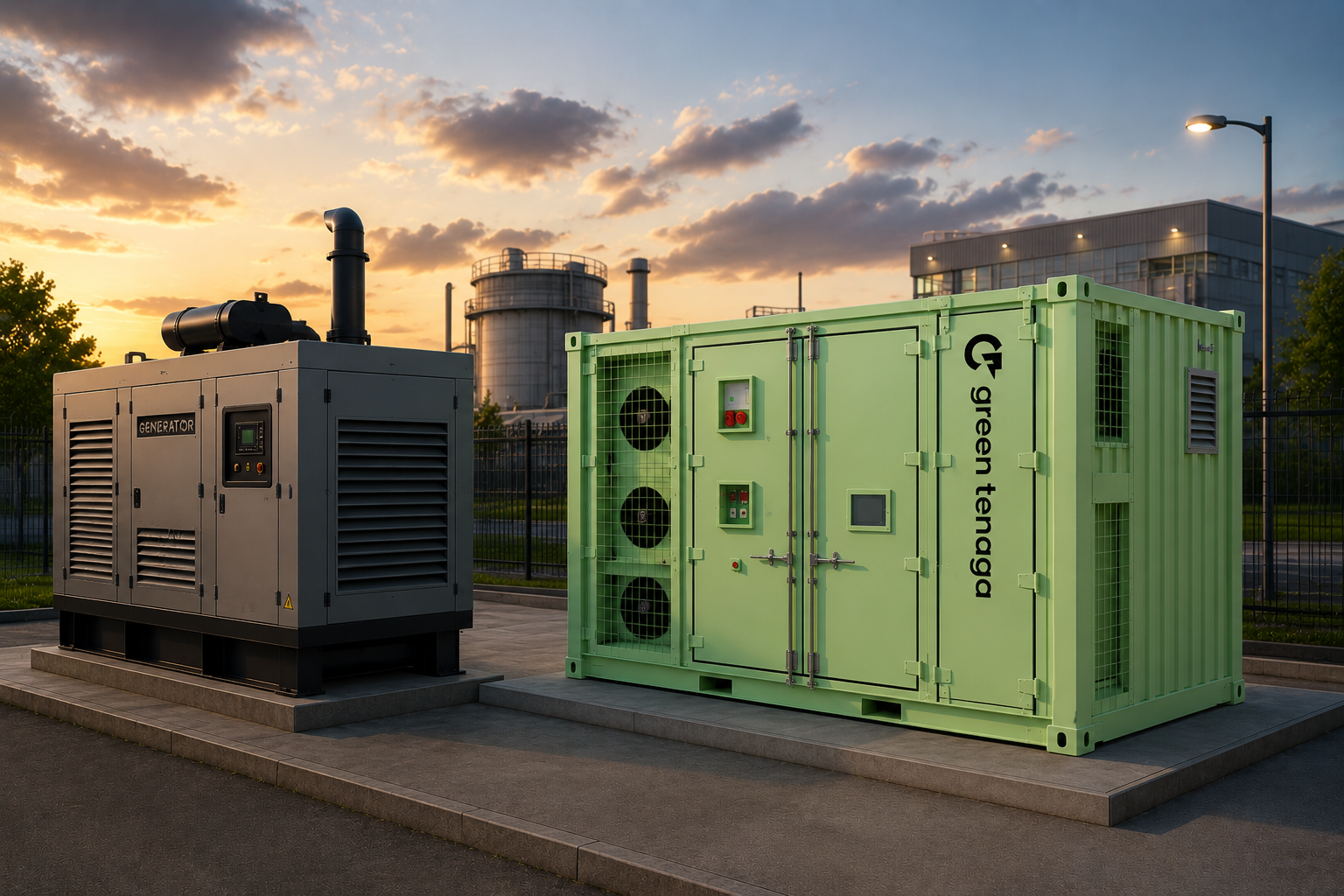
BESS reduces generator runtime while maintaining backup flexibility during longer events.
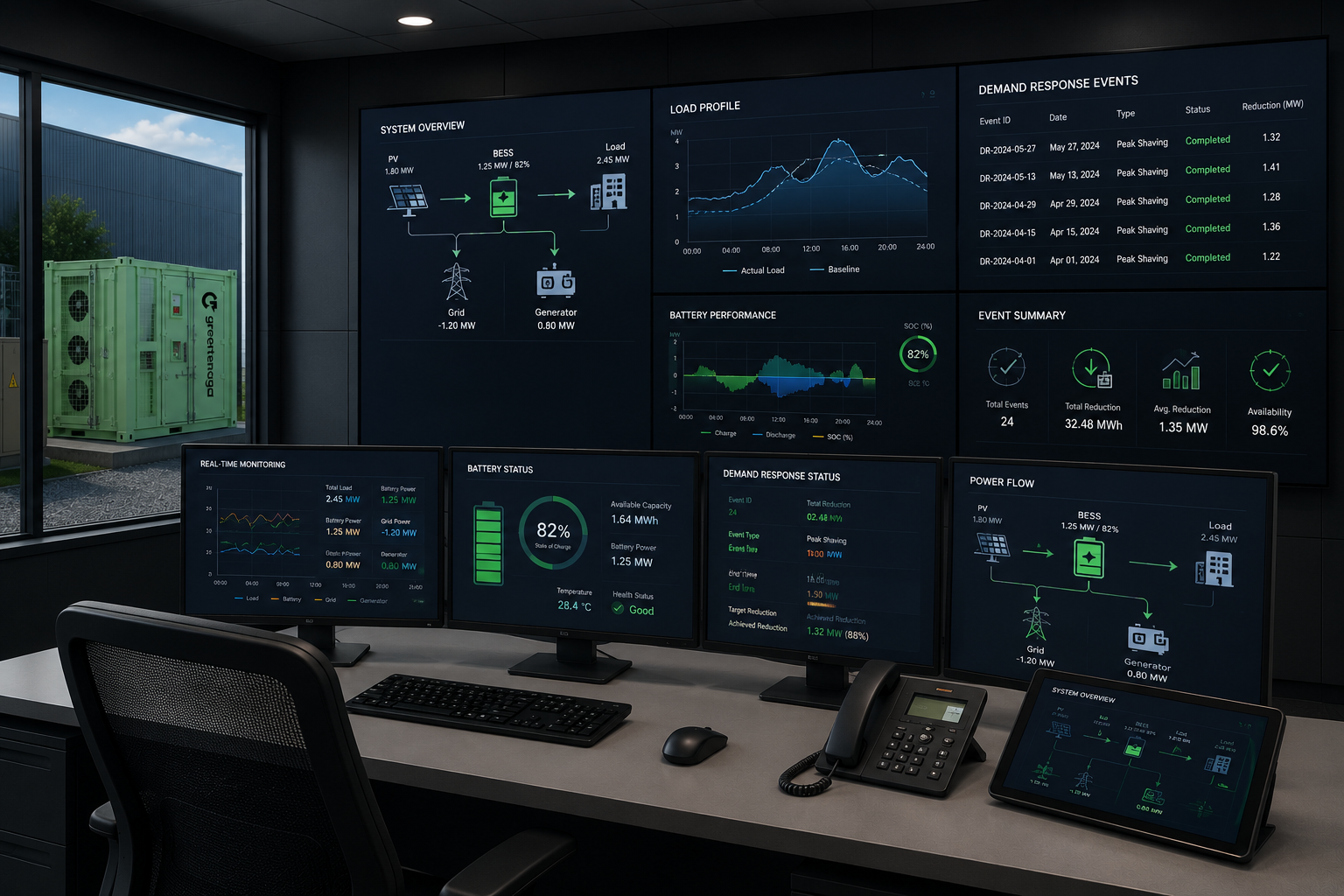
The EMS receives event signals and controls BESS operation automatically.
Demand response is most effective for facilities with high demand peaks, operational sensitivity, flexible loads, or the need to maintain continuity during grid events.
Reduce grid import without interrupting production lines, compressors or heavy equipment.
Support cooling, lifts, lighting and tenant comfort while reducing demand from the grid.
Maintain uptime-sensitive operations while using BESS as a controlled flexibility asset.
Coordinate flexible demand across multiple facilities, shared infrastructure or centralised energy systems.
Reduce peak grid draw while keeping charging operations available for users.
Improve local grid stability, reduce generator dependence and support power resilience.
BESS allows facilities to participate in demand response while improving control, reducing disruption and preparing for future energy market opportunities.
Unlock value from DR, interruptible load or future flexibility programmes.
Respond to grid events without shutting down critical operations.
Use EMS-controlled BESS dispatch for predictable response performance.
Help reduce stress on the electricity network during peak or constrained periods.
Improve visibility over load behaviour, demand peaks and site flexibility.
Prepare your facility for dynamic tariffs, flexibility markets and decarbonisation targets.
We assess your site’s load profile, electrical infrastructure, critical loads and operational requirements before designing a BESS strategy that works in real operating conditions.
✓ Site load behaviour
✓ EMS control logic
✓ Required response capacity and duration
✓ Safety and compliance requirements
✓ Existing electrical infrastructure
✓ Monitoring and reporting needs
✓ Critical and non-critical loads
✓ Demand response requirements
Analyse historical demand, peak patterns and operational characteristics.
Identify demand response potential, event types and participation options.
Model different scenarios to determine optimal BESS size and performance.
Design energy management logic and response controls.
Install, test and commission the BESS system for reliable DR performance.
Continuous monitoring, reporting and performance optimisation.
Let Green Tenaga assess your site’s load profile and identify how BESS can support demand response, load shifting and operational resilience.